Subsea production is an industry built on the edge of what technology can do. The wells are deeper, the pressures higher, and the environment colder than anything engineers faced a generation ago, and the equipment on the seabed must operate for decades without intervention. It is also an industry facing a profound training problem: the experts who built today’s fields are retiring, and the operations themselves are moving toward automation and remote control. The future of subsea production will be shaped by how the industry solves that problem, and the answer is increasingly digital.
Three technologies will define the next phase: artificial intelligence, virtual reality, and the connected data infrastructure that ties them together. Together they are changing not just how subsea systems are designed and operated, but how the people who run them are trained. The companies and training organizations that adopt these technologies early will set the standard for the rest of the industry, and the ones that wait will spend the next decade catching up.
Safety by Design, Taught by Simulation
The foundation of subsea production is safety, and it is safety by design: layered barriers, redundant systems, and procedures that assume failure will happen and plan for it. The subsea tree carries multiple valves; the well has a downhole safety valve; the control system monitors everything and triggers shutdowns automatically. Teaching people to understand this architecture, and to respond when it is tested, is the core of subsea training. Simulation has become the standard way to teach it, because the real seabed is inaccessible and the real consequences of error are unacceptable.
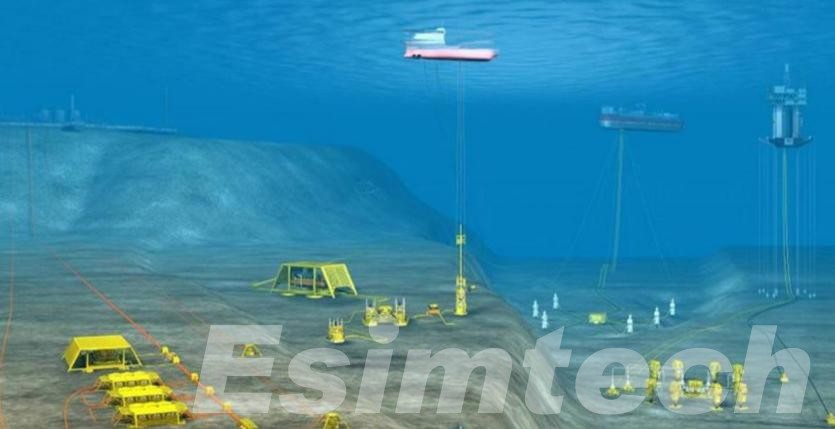
Modern subsea production simulators reproduce the tree, the manifold, the control system, and the emergency shutdown sequence in faithful detail. Trainees practice tree installation, flowline connection, control system operation, and fault response, and they rehearse the cascade of events that follows a failure. The simulator records every action, so instructors can show a trainee exactly where a response was slow or a decision was wrong. This recorded, repeatable practice is the foundation that the next generation of technology will build on.
AI: From Monitoring to Prediction
Artificial intelligence is already entering subsea operations through monitoring and predictive maintenance. AI systems analyze the sensor data from subsea equipment, detect anomalies before they become failures, and recommend maintenance actions that avoid costly interventions. The same intelligence is moving into training: AI-driven simulators can analyze a trainee’s performance, identify weaknesses, and adapt the difficulty of exercises in real time, so every trainee trains at the edge of their ability rather than repeating exercises they have already mastered.
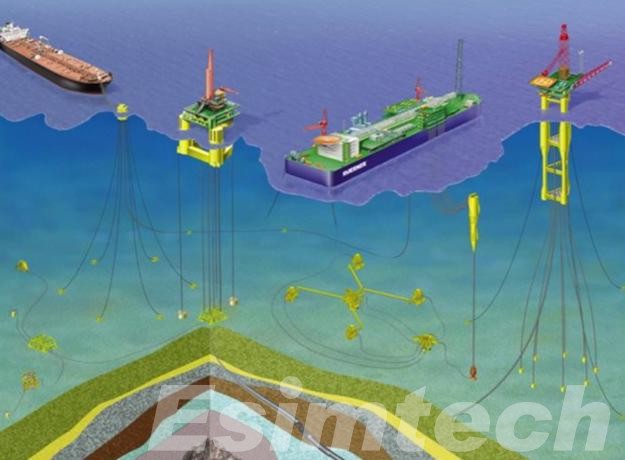
The implications for safety are direct. In subsea production, failures are rare but catastrophic, and the response to a failure depends on personnel who have rehearsed the scenario. AI expands the scenario space, generating an effectively unlimited variety of fault combinations for trainees to practice. A workforce that has rehearsed thousands of failure scenarios in training will respond to the one real failure with calm, practiced precision. For subsea production systems operators, this is the safety dividend that justifies the investment in intelligent simulation.
VR: Bringing the Seabed to the Classroom
Virtual reality is transforming how trainees experience the subsea environment. VR headsets put a trainee inside a virtual ROV view of the seabed, moving through the tree, the manifold, and the flowlines, inspecting components and practicing intervention procedures with natural hand motions. Where flat screens show the subsea scene from outside, VR places the trainee inside it, and the difference in learning outcome is measurable: spatial understanding, procedure recall, and confidence all improve significantly.
The next step is hybrid reality, combining physical control panels with immersive visuals, so that trainees work real controls while seeing the seabed environment around them. This combination is expected to produce the strongest training results yet, because it engages both the hands and the eyes the way real work does. Training organizations that adopt VR now will build the experience base that the next decade will demand.
Beyond: The Connected Seabed
Looking further ahead, the future of subsea production is connected and increasingly autonomous. Digital twins of subsea fields will mirror the physical systems in real time, allowing operators to test procedures in simulation before executing them on the seabed. Remote operation centers will control fields from shore, and the people in those centers will be trained almost entirely in simulation. The boundary between training and operation will blur, because the same digital models will serve both.
This convergence has a clear implication for training organizations: the systems they invest in today must be able to connect to the wider digital ecosystem tomorrow. Choose training platforms that support data integration, scenario sharing, and modular upgrades, and your program will grow with the industry instead of being replaced by it. The fundamentals of subsea production, the architecture, the hardware, the safety layers, will not change; what will change is how deeply and how realistically people can practice them.
The future of subsea production is a future of simulation: AI-adaptive training, VR immersion, and connected data will produce a workforce that is more competent, more confident, and more consistent than anything the industry has seen. For operators, that means safer fields and fewer interventions. For training organizations, it means the opportunity to lead. The technology is available now, the direction is clear, and the cost of waiting is rising with every deepwater project that comes online. The seabed is getting deeper, and the training that protects it is getting smarter.