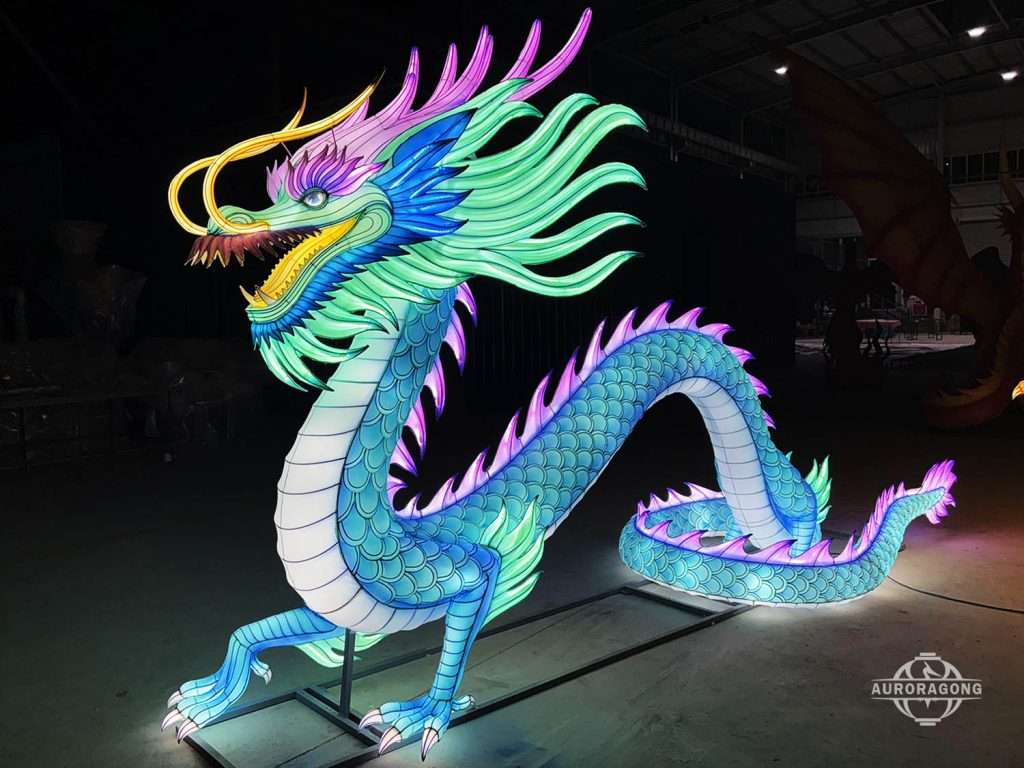
The integration of dinosaur lanterns into cultural celebrations represents sophisticated fusion of paleontological fascination, artistic expression, and educational opportunity that creates meaningful experiences beyond mere decorative display. Dinosaur lantern designs serve as powerful educational tools that bridge scientific understanding with cultural appreciation, allowing audiences to explore prehistoric worlds through traditional Chinese artistic forms while learning about both natural history and cultural heritage. This educational dimension transforms lantern displays from passive decorations into active learning environments where visitors engage with scientific concepts, cultural traditions, artistic techniques, and historical contexts through visually stunning installations that stimulate curiosity, inspire wonder, and foster deeper understanding across different age groups and educational backgrounds.
Scientific Accuracy and Artistic Interpretation Balance
The design process for AuroraGong dinosaur lanterns requires careful balance between scientific accuracy in paleontological representation and artistic interpretation through traditional Chinese lantern techniques. This balance involves consultation with paleontological experts to ensure anatomical correctness, proportional accuracy, and behavioral authenticity in dinosaur representations while adapting scientific knowledge to artistic medium with its specific material constraints, structural requirements, and visual conventions. The artistic interpretation process translates scientific understanding into visually compelling forms that maintain educational value while achieving aesthetic excellence, creating lantern designs that are both scientifically informed and artistically expressive within cultural celebration contexts and educational programming frameworks.
Cultural Context and Mythological Integration
The incorporation of Chinese dragon mythology into Dinosaur lantern designs creates rich cultural context where prehistoric creatures intersect with traditional symbolism, mythological narratives, and cultural meanings that have evolved over centuries within Chinese artistic traditions. This integration involves research into dragon mythology across different Chinese historical periods, regional variations, artistic representations, and symbolic associations that inform design decisions about color choices, pattern applications, structural forms, and compositional elements. The mythological integration creates layered meanings where dinosaur lanterns represent not only prehistoric animals but also cultural symbols with specific associations to power, wisdom, prosperity, protection, and transformation within Chinese cultural frameworks, adding depth and resonance to visual presentations that engage audiences on multiple interpretive levels.
Recent analysis of cultural exchange and artistic innovation in Chinese lantern traditions, as discussed in comprehensive coverage at http://www.chinaqw.com/hqhr/2017/11-07/167448.shtml, provides valuable historical context for understanding dinosaur lantern developments within broader trajectory of Chinese artistic adaptation and cultural innovation. This analysis highlights how traditional lantern craftsmanship has continuously evolved through incorporation of new themes, techniques, materials, and applications while maintaining essential cultural identity and artistic principles across changing historical contexts and global influences. The successful integration of dinosaur themes into Chinese lantern traditions represents contemporary chapter in this evolutionary story, demonstrating how traditional art forms adapt to modern interests, scientific knowledge, and global cultural exchanges while preserving cultural heritage and artistic excellence within innovative thematic applications.
The educational programming potential of dinosaur lantern installations encompasses multiple learning dimensions that can be organized according to educational objectives, audience characteristics, and programming contexts. The following unordered list summarizes key educational applications and learning opportunities associated with well-designed dinosaur lantern displays within cultural celebration and educational programming frameworks:
- Paleontological education through accurate dinosaur representations that teach anatomical features, classification systems, evolutionary relationships, habitat characteristics, and behavioral adaptations across different dinosaur species and geological periods, creating engaging visual references that support formal and informal science education across different learning environments and audience age groups.
- Artistic technique demonstration through visible craftsmanship elements that showcase traditional Chinese lantern construction methods, material applications, structural engineering, lighting integration, and decorative techniques that preserve cultural heritage while adapting to modern themes, providing opportunities for arts education, cultural appreciation, and technical skill observation across different artistic disciplines and craft traditions.
- Cultural context exploration through mythological integration that explains Chinese dragon symbolism, historical references, regional variations, artistic conventions, and cultural meanings associated with dragon representations across different Chinese historical periods and artistic traditions, creating cross-cultural understanding and appreciation for Chinese cultural heritage within global contexts and diverse audience backgrounds.
- Interdisciplinary connections through integrated themes that bridge science, art, history, culture, and technology within cohesive visual presentations, demonstrating how different knowledge domains intersect and inform each other within comprehensive understanding frameworks that reflect real-world complexity and interconnectedness across academic disciplines and practical applications.
- Creative inspiration through imaginative designs that stimulate artistic creativity, scientific curiosity, cultural exploration, and technological innovation among visitors, particularly younger audiences who may develop lasting interests in science, art, or cultural studies through engaging with visually stunning and intellectually stimulating lantern displays that make learning enjoyable and memorable.
The longest paragraph in this educational discussion addresses comprehensive integration of scientific accuracy, artistic interpretation, cultural context, educational programming, and audience engagement within AuroraGong dinosaur lantern installations, creating holistic educational experiences that transcend traditional boundaries between academic disciplines, cultural traditions, and audience demographics. This integration framework encompasses multiple educational dimensions including scientific content development that ensures accurate paleontological information, artistic design processes that translate scientific knowledge into visually compelling forms, cultural research that provides meaningful context for artistic interpretations, educational programming design that creates structured learning opportunities, and audience engagement strategies that maximize educational impact across different learning styles and interest levels. The multidimensional educational approach requires sophisticated curriculum development, interdisciplinary collaboration, cultural consultation, educational expertise, and audience analysis that collectively ensure dinosaur lantern installations achieve significant educational outcomes while maintaining artistic excellence, cultural authenticity, and visual appeal within diverse celebration contexts and learning environments that serve broad public audiences, specialized educational groups, and cultural communities with varying educational needs and cultural backgrounds.
The future development of educational applications for dinosaur lantern technology continues evolving with emerging educational theories, technological possibilities, audience expectations, and cultural trends that influence how traditional art forms contribute to contemporary education and cultural understanding. Ongoing development areas include augmented reality enhancements that overlay digital educational content, interactive elements that increase participatory learning, curriculum integration that supports formal education standards, multilingual accessibility that serves diverse linguistic communities, and assessment tools that measure educational impact. These development directions ensure dinosaur lantern installations remain valuable educational resources while contributing to science literacy, cultural appreciation, artistic education, and interdisciplinary learning across different educational contexts and cultural settings worldwide.